cost comparison between rigid and rigid flex PCBs
Rigid flex pcbs offer high-reliability in harsh environments where traditional PCBs would fail. They can tolerate shock, vibration, oils, chemicals, radiation exposure, and other environmental conditions that would cause conventional circuit boards to fail. These unique capabilities make rigid flex PCBs ideal for aerospace, military, and healthcare devices. They also have applications in commercial and industrial industries. Because of these advantages, rigid flex circuit boards typically cost more than traditional PCBs. However, many factors go into the total cost of a rigid flex board that should be considered in the initial budgeting process.
The material and fabrication processes that go into a rigid-flex circuit board can impact its overall cost. For instance, higher-performance materials like polyimide are often more expensive than FR-4. In addition, utilizing ELIC and multiple laminations costs more than a single-layer board using the same technology. Other manufacturing processes, such as drilling and soldering, can affect the final cost of a rigid-flex circuit board as well.
Stackup design is another key factor in determining the final cost of a rigid flex pcb. Proper stackup design improves signal integrity, mechanical properties, and thermal stability in the flex section. It also allows the flex area to be designed in areas that will experience repeated bending and stress. Additionally, a good stackup design helps manage heat dissipation, which keeps the PCBs operating at their best for longer periods of time.
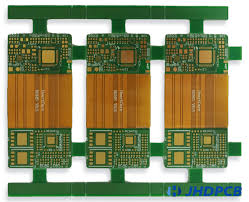
What is the cost comparison between rigid and rigid flex PCBs?
Another major factor that determines the cost of a rigid-flex circuit board is its size. A larger circuit board requires more materials and copper than a smaller one. In order to control the cost of the final product, a designer must limit the number of layers in the rigid-flex board and use a design that optimizes the layout of the components for maximum functionality.
A robust rigid-flex PCB is often made from a rigid laminate with a flexible copper clad core. The thickness of the laminate is a significant cost driver, as are the adhesive systems used to bond the copper to the substrate. Choosing a thinner laminate reduces the cost of the rigid-flex circuit board, as does selecting an adhesive system that uses less epoxy resin to bond the copper to the base film.
Another cost-reducing strategy for rigid flex PCBs is to minimize the number of blind and buried vias in the design. These holes require more complex manufacturing techniques that increase the processing time and lower the yield. This can be offset by working with a manufacturer that offers high-quality flex PCB manufacturing services at a competitive price.
The final cost of a rigid-flex circuit is also affected by the volume of production. Higher-volume production leads to better economies of scale, which can significantly lower the per-unit cost of a rigid-flex PCB. On the other hand, low-volume production can lead to more costly rigid flex PCBs because the fixed cost of the setup must be spread over fewer units. To avoid these costs, designers should engage with manufacturers early in the design process to ensure that their design can be produced at a competitive price without compromising quality.