2 Types of Piano Transcriptions
Music transcription involves converting a musical composition into a format that can be read and understood by musicians. This can be done by hand or using computer software. Transcription can be used for a wide variety of purposes, including education, research, and recreation. Musicians use transcriptions to play music from other sources, such as a film score or a song in a live performance.
Piano transcriptions are an important part of a pianist’s repertoire and can help them develop their skills. These pieces are usually arranged for piano(s) and a small group of instruments or voices. These arrangements often take liberties with the original composition and may include harmonies that don’t exist in the original work. They can also change the tempo and rhythm of the original piece. These changes can make it more accessible for musicians who don’t have the time to learn an entire piece of classical music.
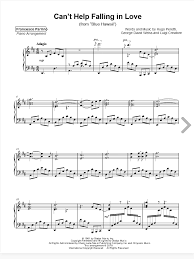
A piano transcription consists of a set of notation that can be read by musicians to determine what sounds to play on the piano. The notation typically contains lines and spaces that represent pitches. On sheet music, these are called staves. The top stave is usually marked with a treble clef and the bottom one with a bass clef. A dot after the note head, shown in the above picture, indicates that the note is to be held for a longer duration. This can be done on a single note or on two notes that are tied together. A tied note should be held as long as the value of a full-length note.
What Are the 2 Types of Piano Transcriptions?
When transcribing music for the piano, it is important to start with the parts that are easy to identify. This will likely include any prominent single-note instrument (including vocals). It is possible to transcribe chords, but this can be difficult. When transcribing music, it is a good idea to start with the melody and loop it a few times to get the hang of it. After that, a musician should work on the other elements of the piece. It is much like doing a jigsaw puzzle, and the harder parts will eventually fall into place.
There are four different levels of transcription: frame-level, note-level, stream-level, and notation-level. The goal of a transcription is to capture the timing and pitch of each sound in a given section of music. This can be difficult because the timbre of a sound is not captured by notes alone, but by the combined vibrations of multiple frequencies.
A musical transcription can be made for any type of composition, including works originally composed for a solo instrument or voice, for a piano(s), or for an ensemble of instruments and/or voices. If the sheet music for the composition doesn’t exist, a pianist can attempt to transcribe the piece by listening and remembering what the composer intended. It is also important to ask the composer for permission to transcribe his or her work. If the composer agrees to allow the transcribed version to be performed, the original artist will be credited.