
How Flexible PCBs Can Be Used
If you’re considering flex circuits for high-temperature applications, it’s important to know what materials can be used to provide premium performance. Depending on the application, you may require a rigid or flexible PCB, or both. The key consideration is that both rigid and flex circuits must be able to resist thermal expansion, as well as be able to conduct current and disperse heat.
There are many different flexible circuit PCB material constructions to consider, including polyimide, FR-4, and other options. Each has its advantages and disadvantages. Polyimide is an excellent choice for high-temperature applications because it has a low thermal expansion coefficient and can maintain its properties in a wide temperature range. The downside to polyimide is that it can be very costly, making it unsuitable for some applications.
Another option for high-temperature applications is FR-4 with copper foil. This provides good thermal stability and has better conductivity than bare copper foil. However, it isn’t as durable as a polyimide circuit and is more susceptible to cracking and oxidation.
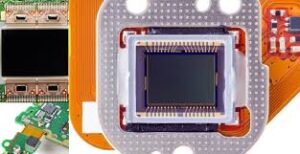
How Flexible PCBs Can Be Used in High-Temperature Applications
Rigid-flex and multilayer circuits are also excellent choices for high-temperature applications. These types of circuits have high layer counts and can be produced with plated through holes, or as a rigid-flex board without them. Rigid-flex boards can be fabricated with a combination of materials including copper, aluminum and other metals. In addition, thermally conductive materials such as Pressure Sensitive Adhesives (PSA) can be applied to specific areas of the circuit.
For both high-temperature and flex applications, it’s important to consider the insulators used to support the conductors. These insulators can be made of a variety of materials, such as polyimide, polyester, silver ink, and solder mask. The insulators need to be strong enough to support the conductive copper, yet thin enough to provide flexibility. It is also common to include adhesives such as epoxy or PSA to bind the surface mount components to the circuit board.
The insulators in flex circuits can also be coated with special finishes to provide additional functionality and protection for the board. For example, tin can be used for abrasion resistance and soft gold is perfect for covering the circuits when an assembly process such as wire bonding is being performed.
Another benefit of using a flex PCB is that it can be shaped and bent during installation, which helps to save space in the final product. This allows the flex circuits to fit into small and irregular spaces that would otherwise be difficult or impossible for standard rigid PCBs to accommodate. It also improves airflow by allowing for thinner, more streamlined conductors and devices. This streamlined design also reduces weight, which can help to increase the battery life of an electronic device. In addition, a flex circuit is more likely to dissipate heat quickly because of its flexible nature. It can also be manipulated more easily during installation and servicing, which has been proven to improve the reliability of an electronic device. Lastly, a flex circuit can be designed with a higher density of devices, which frees up space for additional features.


