
Flex PCB Manufacturer Handles Complex Circuit Designs
If your circuit design is too complex to handle with a traditional rigid PCB, a flex PCB manufacturer may be able to help. However, these types of circuit boards are not without their challenges. They require meticulous assembly processes that align with their flexible nature, and excessive bending can damage the traces or components.
These factors make it challenging to produce reliable flex circuits. To overcome these challenges, a flex PCB manufacturer uses special techniques, including adhesives and additional layering to provide support. A flex PCB manufacturer also uses specific materials to improve heat dissipation and to protect the copper layers from damage.
One of the most important factors to consider when designing a flex pcb manufacturer is the bend radius, which determines how far the board can be bent without damaging the conductive traces or components. This is typically measured at the point where the thickness of the copper tracing exceeds the thickness of the substrate material. A higher bend radius means a more rigid design, but it can also mean decreased current-carrying capacity.
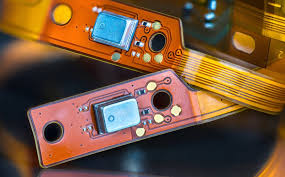
How a Flex PCB Manufacturer Handles Complex Circuit Designs
Other considerations include the copper thickness and the etching process used to create the traces. Thinner copper traces offer more flexibility, but they can also reduce the current-carrying capacity of the traces. The copper etching process can be impacted by the temperature and humidity of the production environment, so it is critical to use consistent temperatures and humidity levels.
In addition to the etching process, a flex circuit’s copper traces must be protected with a coverlay or solder mask layer. Coverlay layers are affixed to the traces with acrylic or epoxy adhesives. In some cases, the adhesive-less process is used in which case the traces are printed directly on the circuit board with photo-imageable solder mask.
A flex circuit’s pad area is often plated with gold to improve the quality of connections and enhance signal transmission. These areas are also susceptible to stress concentration due to their flexability, so it is important to avoid sharp corners that could lead to failure over time. Instead, rounded corners are preferred to improve the strength of these areas.
Flex PCB manufacturers also play a critical role in the prototyping and testing phases of product development. Given the complex nature of flexible circuits, it is essential to test prototypes rigorously to identify any potential issues before mass production. Manufacturers use various testing methods, including electrical tests, thermal cycling, and mechanical stress tests, to ensure the reliability and durability of the Flex PCBs. This phase is crucial for industries like medical devices or aerospace, where failure is not an option, and components must meet the highest standards of quality and performance.
Other pad features that can improve the performance of a flex circuit are via-in-pad and pin-in-hole. Pin-in-hole allows for soldering to take place without exposing the pads to the open air, while via-in-pad increases the connection area of a pad and decreases the likelihood that a pad will crack over time due to stress. These features can also make it easier for the flex circuit to withstand high temperature and humidity conditions. A flex circuit’s pad area should also be covered with a coverlay or solder mask to prevent electrical shorting and contamination.

