AI agents advertise services on an exchange
In the emerging landscape of autonomous systems, AI agents are increasingly participating in digital marketplaces where they offer and exchange services without direct human intervention. One important aspect of this ecosystem is how AI agents advertise services on an exchange. Understanding this process sheds light on the mechanisms enabling these agents to connect with potential collaborators, clients, or other agents efficiently.
An exchange for AI agents functions as a marketplace that facilitates interactions among autonomous entities. For AI agents to successfully advertise services on such an exchange, they must utilize a combination of data representation, communication protocols, and reputation systems. The core idea is to enable AI agents to broadcast the availability and details of their services in a structured, machine-readable format that other agents can interpret and evaluate.
To advertise services effectively, AI agents often employ semantic description frameworks. These frameworks use standardized ontologies and metadata schemas to represent the characteristics, capabilities, pricing, and terms of the services they offer. For instance, Web Ontology Language (OWL) or schema.org vocabularies help encode service attributes so that other agents can automatically discover and match these offerings against their needs. This structured representation allows for automated service discovery, which is crucial for scalability in an exchange for AI agents.
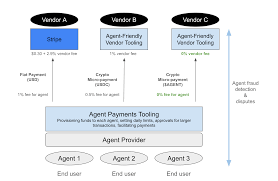
How do AI agents advertise services on an exchange?
Communication protocols also play a vital role in how AI agents advertise services. Protocols such as RESTful APIs, gRPC, or decentralized messaging systems enable agents to publish service listings and respond to queries dynamically. By exposing endpoints that other agents can access, an advertising agent ensures that its service catalog is accessible and can be updated in real time. This responsiveness is essential in fast-paced environments where service availability or pricing may fluctuate frequently.
Another critical factor in the advertising process is the use of decentralized registries or distributed ledgers. AI agents can register their services on blockchain-based platforms where listings are publicly verifiable and tamper-resistant. This increases trust and transparency, as agents can verify the authenticity and history of service providers before engaging in transactions. In an exchange for AI agents, this blockchain-backed advertising mechanism helps prevent fraud and promotes accountability among participants.
Reputation systems complement the advertising process by providing contextual information about the reliability and quality of services. AI agents often maintain or access reputation scores based on past interactions, feedback, and successful transactions. When advertising services on an exchange for AI agents, an agent’s reputation can be included as part of the service metadata. This helps prospective clients make informed decisions and fosters healthy competition among service providers.
Furthermore, AI agents can leverage machine learning algorithms to optimize how they advertise services. By analyzing demand patterns, pricing trends, and customer preferences within the exchange for AI agents, they can tailor their advertising strategies to maximize visibility and appeal. For example, an AI agent might adjust its service descriptions, pricing, or offered features based on feedback or observed market conditions to attract more business.
In conclusion, AI agents advertise services on an exchange through a sophisticated interplay of semantic data representation, communication protocols, decentralized registries, reputation systems, and adaptive learning techniques. These mechanisms enable autonomous agents to broadcast their offerings efficiently, maintain transparency, build trust, and dynamically adjust to market demands. As exchanges for AI agents evolve, advertising methods will become even more advanced, further empowering AI agents to participate effectively in digital economies without human oversight. The ability of AI agents to advertise services autonomously marks a significant milestone in the development of intelligent, self-organizing systems.